Alibaba Wants to Build a 10-Trillion-Parameter AI Model
Alibaba just put another giant number into the AI arms race: a future Qwen model could scale to as many as 10 trillion parameters, alongside a new AI chip designed to power increasingly massive systems.
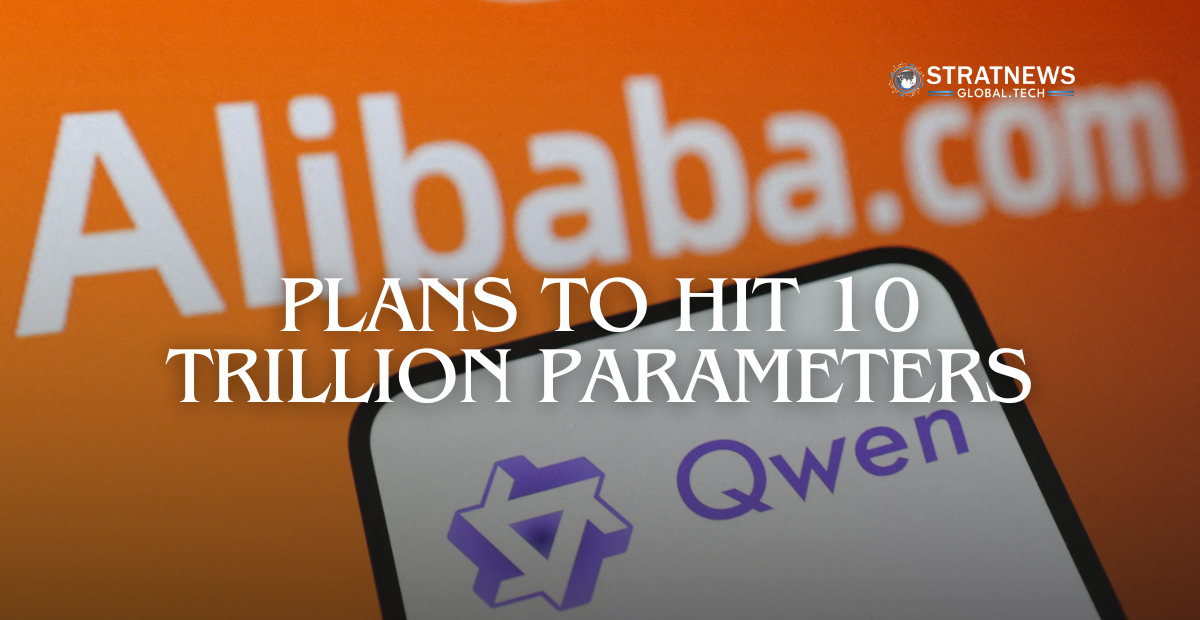
A number has just entered the AI race that sounds almost ridiculous when you first hear it: 10 trillion. Alibaba says it is working toward a future generation of Qwen artificial intelligence models that could eventually reach between 5 trillion and 10 trillion parameters, putting another enormous figure into an industry that has spent the past several years competing over increasingly powerful models, bigger computing clusters and ever more ambitious ideas about what AI will eventually be able to do.
The announcement came Tuesday at Alibaba Cloud’s annual Apsara Conference in Hangzhou, where the company also unveiled a new AI processor and described a much broader plan to expand the infrastructure needed to train and operate increasingly demanding AI systems. Alibaba's current flagship Qwen 3.8 Max model has 2.4 trillion parameters, meaning the proposed upper end of the new roadmap would represent a dramatic increase in scale.
Ten Trillion Is a Very Big Number
Parameters are one of the ways researchers describe the scale of an AI model. They are learned values adjusted during training that allow a system to recognize patterns and generate outputs. But there is an important distinction between scale and intelligence. A model with more parameters is not automatically smarter, more accurate or more useful than a smaller model. Architecture, training data, training methods and the efficiency with which a model uses its computing resources can matter just as much.
Still, scale matters because increasingly capable AI systems require enormous amounts of computing power. Alibaba's proposed 5-to-10-trillion-parameter range would put its future Qwen models on an entirely different level of physical and computational requirements compared with today's systems. The interesting question is therefore not simply whether Alibaba can produce a model with a spectacular parameter count, but whether that additional scale can translate into better reasoning, longer-running tasks and capabilities that current AI systems struggle to provide.
Alibaba Wants to Build the Machine Behind the Machine
The model announcement was only part of Alibaba's presentation. The company also introduced the Zhenwu V900, a new AI processor developed by its T-Head semiconductor division. Alibaba says the V900 delivers three times the performance of its predecessor, the Zhenwu M890, and that clusters using the chip could eventually scale to as many as 500,000 processors for training and running very large AI models. Commercial production is targeted for the first quarter of 2027.
The AI Race Is Becoming an Infrastructure Race
Alibaba says it wants its global data-center capacity to exceed 20 gigawatts by 2032. That sounds like an infrastructure announcement rather than an AI announcement, but the two are becoming increasingly difficult to separate. A model measured in trillions of parameters requires enormous computing clusters, memory, networking, cooling and electricity. The bigger AI models become, the more physical infrastructure is required to train and operate them.
This is one of the biggest changes happening in the AI industry. A few years ago, the public conversation was dominated by models and chatbots. Now the competition increasingly involves semiconductor manufacturing, specialized processors, data-center construction, energy consumption and the ability to connect thousands or even hundreds of thousands of chips into a single computing system.
That also explains why Alibaba's hardware strategy matters beyond Alibaba itself. Chinese technology companies are working to strengthen domestic AI computing capabilities at a time when access to some advanced foreign processors remains restricted. Alibaba is pursuing its own approach by combining models, chips and cloud infrastructure, while companies such as Huawei are also developing domestic alternatives. The result is an AI competition that increasingly extends beyond software and into the physical technology required to run it.
Bigger Does Not Automatically Mean Smarter
This is where the 10-trillion headline needs some context. Parameter count makes for an impressive number, but it is not a universal score for intelligence. A smaller, more efficiently designed model can outperform a much larger model on particular tasks, while a huge model can still make basic mistakes or confidently produce incorrect information.
The real test will be what these future systems can actually accomplish. Can they reason through complicated problems for much longer periods? Can they use tools reliably? Can they understand large projects without constantly losing context? Can they plan a sequence of actions and execute it without requiring a human to intervene every few minutes?
Those questions matter much more than whether the specification sheet says two trillion, five trillion or ten trillion parameters.
What Alibaba Is Really Betting On
Alibaba says its Qwen research is moving toward increasingly complex and longer-running tasks and that its researchers are exploring forms of recursive self-improvement, in which AI systems can identify weaknesses, conduct experiments and generate training data with less human involvement. Those statements describe the company's research direction rather than proof that a fully self-improving AI system has already been achieved.
The company has also made clear that the 10-trillion figure is a future target rather than a finished product available today. Alibaba says Qwen 4 is already in training, while later generations are expected to push the scale toward the 5-to-10-trillion range. That distinction is important because the announcement is fundamentally a roadmap for where Alibaba wants its AI business to go rather than the unveiling of a completed 10-trillion-parameter model.
For ordinary users, none of this means that a 10-trillion-parameter AI suddenly appears on their phone tomorrow. But it does show how dramatically the AI industry is changing. The companies competing in this market are no longer thinking only about better chatbots or slightly improved benchmarks. They are building entire technological ecosystems around AI, from processors and data centers to cloud platforms and increasingly autonomous software systems.
And that leaves the most interesting question of all. If Alibaba eventually reaches 10 trillion parameters, what will those extra trillions actually buy us?
A bigger number alone will not change the world. An AI system that can reliably reason through difficult problems, work across long-running projects, use tools and perform useful tasks with far less human supervision might.
The next phase of the AI race may therefore have very little to do with who can build the biggest model.
It may come down to who can make that enormous model actually useful.
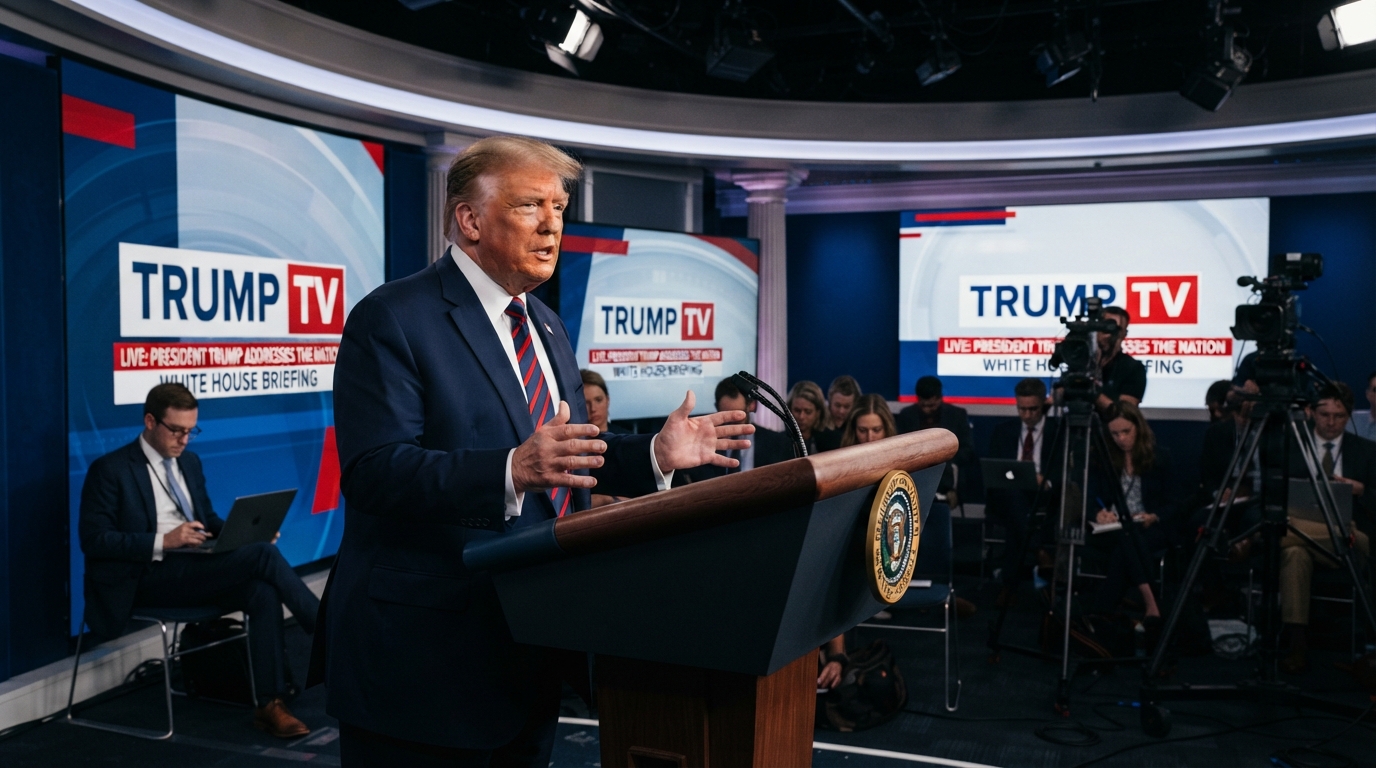
Trump TV, der Mamdani-Handschlag und die seltsame neue Politik des Direktansprechens
Trumps neue direkte Medienkampagne kollidiert mit einer unerwarteten Begegnung mit dem New Yorker Bürgermeister Zohran Mamdani und sorgt für einen der seltsamsten politischen Momente des Internets dieser Woche.
Mehr von VIRALWIRE
Trump TV, der Mamdani-Handschlag und die seltsame neue Politik des Direktansprechens
Trumps neue direkte Medienkampagne kollidiert mit einer unerwarteten Begegnung mit dem New Yorker Bürgermeister Zohran Mamdani und sorgt für einen der seltsamsten politischen Momente des Internets dieser Woche.
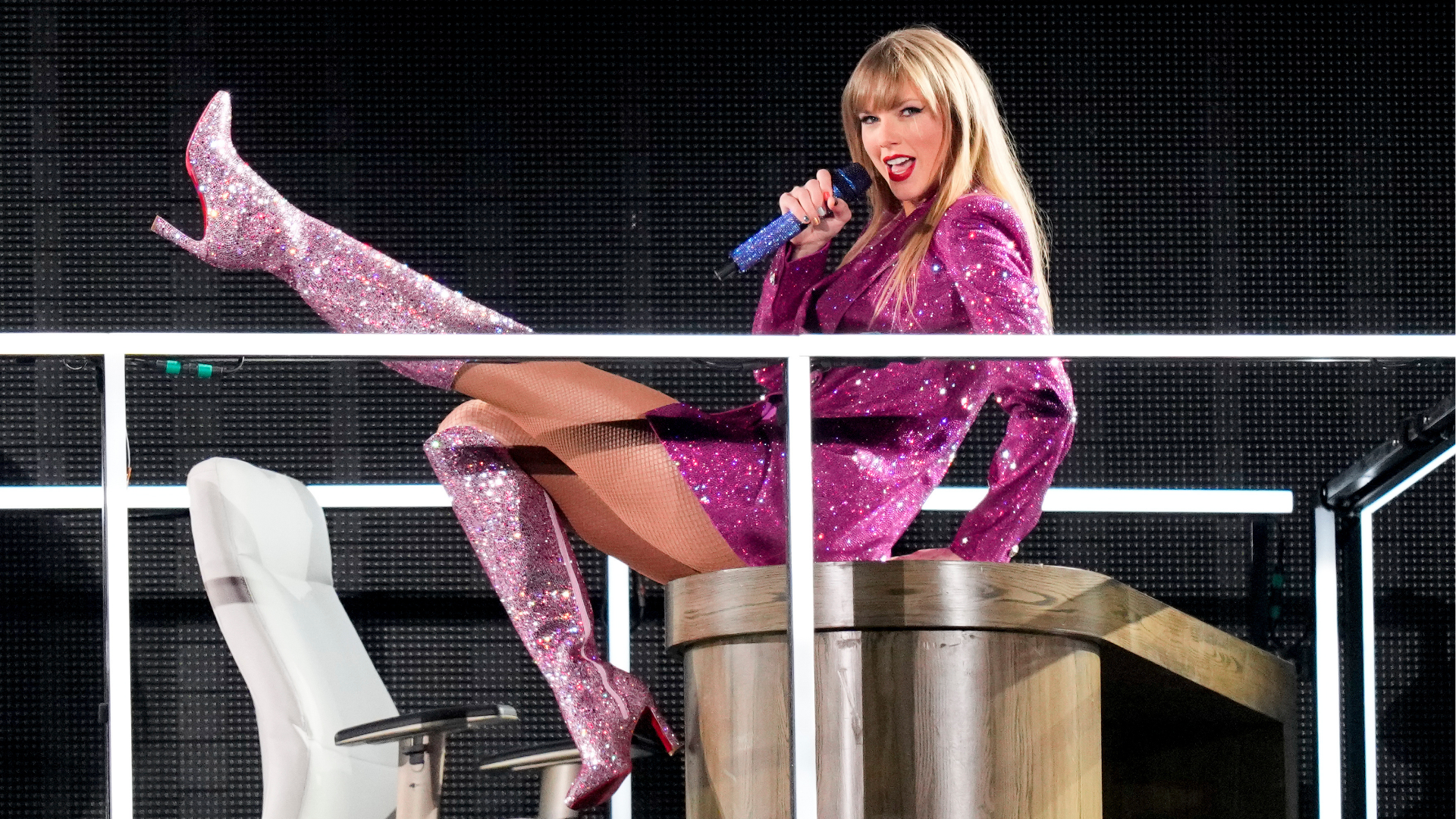
Taylor Swift Just Dropped a New Mystery: ‘Patient Zero’ Is Coming Friday
Taylor Swift has turned another cryptic countdown into a surprise music announcement, revealing that her new single “Patient Zero” will arrive this Friday after days of fan theories and carefully planted clues.

Brad Pitt Is Back as Cliff Booth — and the First Trailer Just Dropped
Brad Pitt is back as one of his most recognizable characters as the first trailer for The Further Mis-Adventures of Cliff Booth gives fans a new look at David Fincher's highly anticipated follow-up to Once Upon a Time in Hollywood.

Channing Tatum Breaks His Silence on the Viral Burner Account Rumor
Channing Tatum has denied a viral rumor linking him to a secret Instagram burner account allegedly commenting on his former fiancée Zoë Kravitz and her relationship with Harry Styles.