Trump TV, the Mamdani handshake and the strange new politics of going direct
Trump’s new direct-to-audience media push collides with an unexpected meeting with New York mayor Zohran Mamdani, creating one of the internet’s strangest political moments of the week.
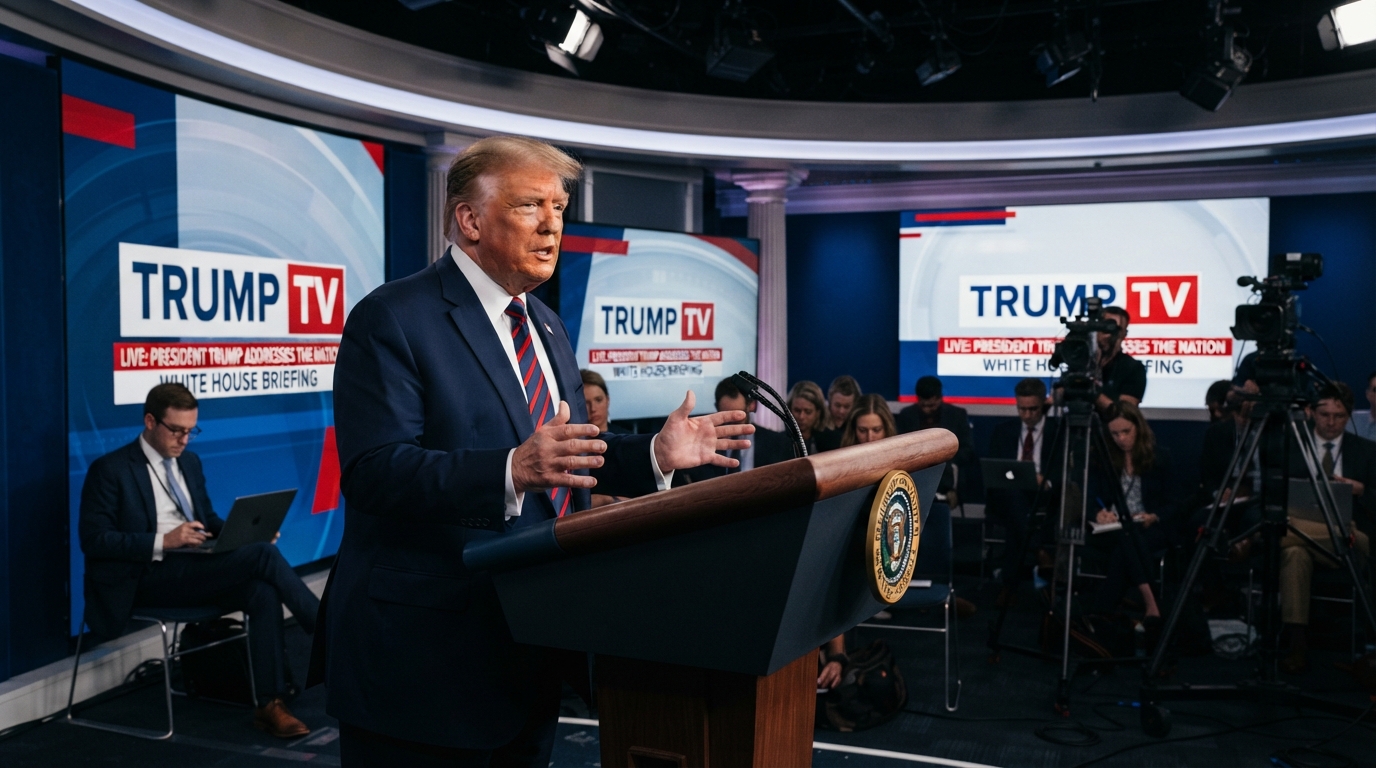
Washington has been fighting with the traditional media for years. This week, that fight took another turn — and the internet immediately turned it into a spectacle.
On September 21, the White House launched Trump TV, a 24/7 YouTube livestream built around Donald Trump and his administration. The channel features presidential footage, announcements, events and other White House-produced material, arriving at a moment when several major news organizations have stopped participating in the traditional White House television pool after CNN, MS NOW and Politico were barred from the White House grounds.
The timing is what makes the story especially combustible.
Trump has spent much of his political career arguing that traditional media organizations distort or unfairly portray him. The new livestream takes that argument one step further: instead of waiting for television networks to decide what becomes the story, the administration can publish the footage itself and send it directly to an audience.
Supporters see that as cutting out the middleman. Critics see something much more consequential: a government producing its own continuous political media operation while simultaneously fighting with independent outlets over access.
That disagreement is now part of the story itself.
Trump TV does not need to persuade everyone to watch it. It only needs to create enough clips, screenshots and arguments to escape the livestream and spread across X, TikTok, YouTube and traditional news sites. In that sense, the controversy may be almost as important as the channel.
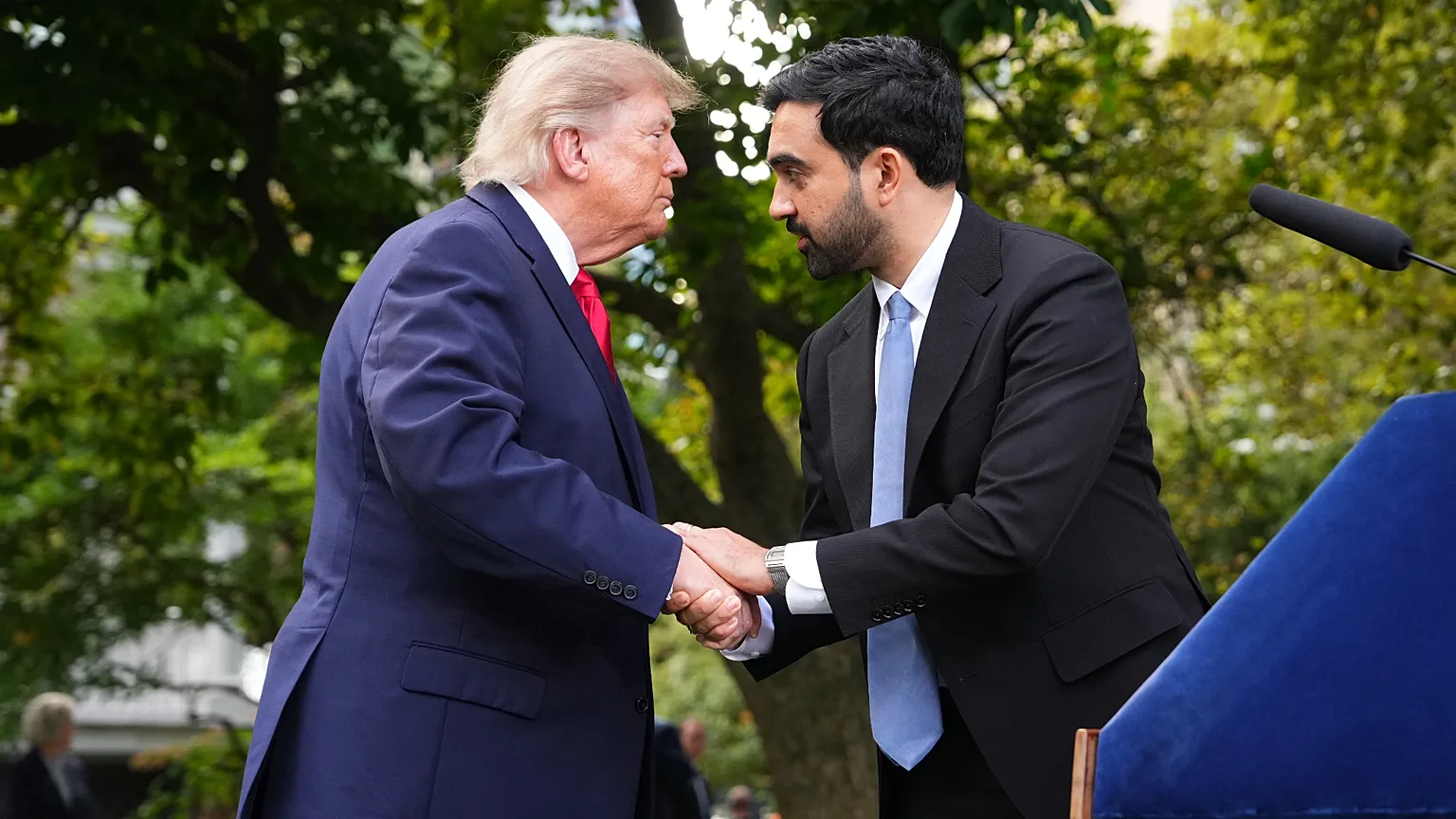
And then came the handshake.
Only a day later, Trump met New York City Mayor Zohran Mamdani at Gracie Mansion in Manhattan. The meeting was striking because the two politicians have spent months representing very different political worlds. Trump has repeatedly attacked Mamdani and previously used the language of “communist” politics when talking about him. Yet after their latest meeting, Trump publicly said he hoped Mamdani would be a great mayor.
On one side: Trump launching a government-produced media stream designed to communicate directly with the public.
On the other: Trump standing beside a young New York mayor who has been one of the more recognizable figures on the American left.
The meeting itself was not simply a photo opportunity. Trump and Mamdani discussed issues including housing and affordability in New York, with particular attention to a potential housing development at Sunnyside Yard in Queens. Mamdani also said they discussed immigration and concerns surrounding the treatment of immigrant New Yorkers.
But politics on the internet rarely stops at what was actually discussed.
The handshake became the story.
For Trump's critics, the moment raised the obvious question: what happened to months of attacks? For Mamdani's critics, it raised a different question: does sitting down with Trump represent pragmatic governing or political compromise? And for supporters of both men, the meeting offered another interpretation — that politicians can disagree intensely while still finding areas where cooperation is possible.
That ambiguity is precisely why the image travelled so quickly.
There is also a larger media story underneath it.
The traditional White House press pool exists partly so that news organizations can share access to presidential events and provide independent coverage. The current dispute has challenged that arrangement, with CNN, MS NOW and Politico suing the administration after being denied access, while other networks temporarily suspended pool coverage in solidarity.
Trump TV arrives directly inside that fight.
The administration says it can communicate with Americans without depending on outlets it believes are hostile or unfair. Critics argue that government-controlled footage cannot replace independent journalism because the producer controls what is shown, what is omitted and how events are presented.
Both arguments are now competing for attention in the same digital space.
And X is where the collision becomes particularly visible.
One post can frame Trump TV as the future of direct political communication. Another can describe it as government propaganda. A third can ignore the media dispute entirely and focus on the bizarre political optics of Trump warmly greeting Mamdani.
Then someone posts the handshake.
The algorithm does the rest.
The X reaction
The most interesting part of this story may not be what either politician intended.
It's how quickly audiences turn political events into competing narratives.
One side sees Trump TV as a direct-to-public alternative to legacy media — essentially saying that if traditional outlets won't carry the administration's message, the administration can distribute it itself.
The other side sees the same development as a warning sign: government-produced political media can give an administration enormous control over what its supporters see without the filtering, questioning or editorial independence normally associated with a newsroom.
The Mamdani meeting creates an entirely different debate.
Some observers see it as evidence that political opponents can still negotiate when there are concrete issues on the table. Others see the friendliness as political theatre. Neither interpretation changes the basic fact that the two men met, discussed New York issues and publicly adopted a considerably warmer tone than their earlier rhetoric suggested.
That is the part the internet understands better than almost anything else: politics is increasingly consumed through moments.
A handshake.
A clip.
A sentence.
A screenshot.
A livestream.
A post that gets 100,000 views before the evening news has even finished writing its headline.
Trump TV is built for that environment.
So is X.
And, apparently, so is the Trump-Mamdani relationship.
What happens next?
The bigger question is whether Trump TV becomes a lasting media channel or simply another digital vehicle for the administration's messaging.
Its launch also comes at a moment when access to the White House press operation is being fiercely contested. That means every Trump TV broadcast can become part of a second story about who controls political information — the administration, independent journalists, or increasingly fragmented online audiences.
Meanwhile, Trump and Mamdani still disagree sharply on major issues, particularly immigration and other questions involving the federal government and New York City. Their willingness to meet does not erase those differences.
But the handshake has already done something politically useful for both men: it created another enormous conversation.
And in 2026, sometimes the conversation is the story.